Talk with an
expert.
Bring us your connected product challenge.
Fill out the form below and a Twisthink senior leader will review your inquiry and follow up within 24 hours to discuss practical next steps.
Twisthink’s CEO, Dave Moelker, had the opportunity to join The Peggy Smedley Show podcast to talk about why connected products, data, and AI matter today more than ever before.
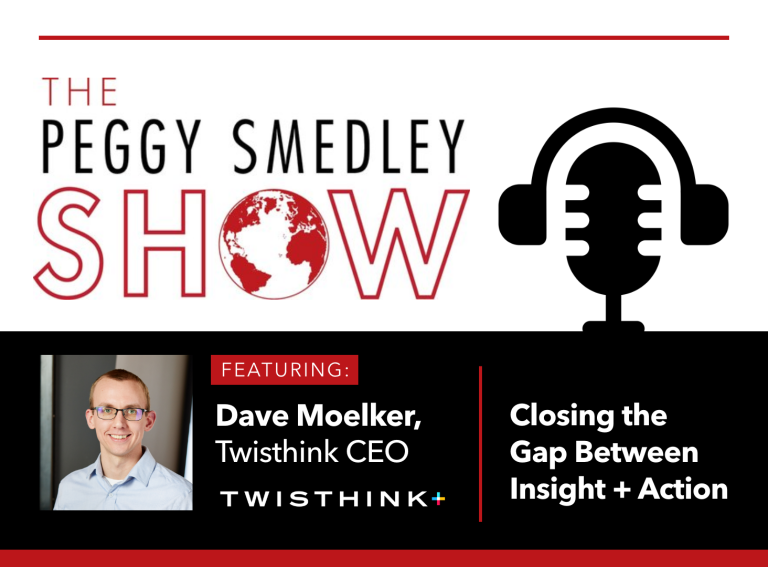
Twisthink’s CEO, Dave Moelker, had the opportunity to join The Peggy Smedley Show podcast to talk about why connected products, data, and AI matter today more than ever before. He says customers’ expectations continue to move forward and too often there is a gap between insight and action.
They also discuss:
[00:00:06] Peggy Smedley: Welcome back to the Peggy Smedley Show. Your voice for our connected world with your host, Peggy Smedley. Hello, listeners, and welcome back to the Peggy Smedley Show. I’m your host, Peggy Smedley. During the past three episodes, we’ve taken OEMs from connected product curiosity to real commercial opportunity. Today, we bring it home. Too many efforts stall at dashboards and pilots. The real value comes when you turn field data into decisions, action, and revenue. And that’s exactly where we’re going in this final conversation. Dave Moelker of Twisthink is back with the practical path forward how OEMs can start with one costly pain point. Use the installed base to prove value fast and build solutions that work for customers, technicians, dealers, and the entire value chain and even service all the way to making a profitable future. If you’re ready to move from legacy to true customer value, this is the episode you need. Dave, thanks for joining me today.
[00:01:15] Dave Moelker: Yeah. Thanks, Peggy. Great to be back with you.
[00:01:18] Peggy Smedley: All right. So we’ve got a lot to wrap this three part series we’ve been talking about. And we really want to talk about how you go from that telemetry to revenue discussion that we’ve been talking about. And I think this is a really good one that lots of people need to understand. So maybe we should get right to the heart of it. And what should an OEM do? Recognizing or maybe that connected products, that data and AI. Why does all that matter? Let’s get to the heart of all that.
[00:01:48] Dave Moelker: Yeah, yeah, I think the industry and customer expectations like we’ve talked about, they continue to move forward. And these technologies have arguably been in the market for a long while. And yet we’re still, I think, as an industry, still struggling to get all that value from it. So it takes a really focused and intentional effort to drive into kind of how do we do that? And like you’re saying, really starting with that business case and working backwards from there is really what’s most important. I think in many cases, we start with the technology and look for a place to apply it, and we’ve got it backwards in that case. So I think when we can work backwards from the business case, from the value created across that ecosystem, we can deliver technology that ultimately gives that business value that we need.
[00:02:38] Peggy Smedley: So let’s talk about why do so many connected products efforts stall at that dashboards that I mentioned or pilot stage? We hear that discussion so many times.
[00:02:50] Dave Moelker: Yeah, yeah, I think a lot of the times it’s that gap between insider information and action. It’s getting to that point of action that’s so critical. And when we’re able to, especially with connected products and IoT, we can give a lot of insight, a lot of information about what’s going on in the real world and in the physical world. It’s that ability to take action on it. Right? And as we’re seeing now with the rise of what you might call physical AI and robotics, right, sometimes that actually might actually be taken out by an autonomous system. But often, frankly, for a lot of legacy organizations, and I think in many cases for the for the near term, at minimum, it’s still going to be humans in that loop taking that action. We need to make sure that isn’t we’re not just giving data, but we’re really giving, we’ve talked about it so many times, we’ll keep beating the drum good, clean contextual data so that either our AI systems or the people in the system, the humans in the system, can really take action and get that outcome that we’re looking for.
[00:03:53] Peggy Smedley: So maybe if someone’s listening right now and they’re trying to figure this out, and the OEMs not ready at this point to move a full product development effort right now, what should they maybe do for the next 30 days? We don’t want them to just sit and not do anything. What advice would you give them?
[00:04:10] Dave Moelker: Yeah, I think again, keep beating this drum. But start with your business problems. Number one: Identify your business problem. Number two: Just go through that exercise of mapping the ecosystem around it. Who are all of those different stakeholders that matter and who’s all effective? Then the third step here again, these are all kind of analysis steps. You can go through these actually pretty quickly. The third step would be: Look at the data you have that that surrounds that problem that you’ve identified. What’s the data. What’s the technology that I have in place today that can make an impact. Look, again, I love the idea of testing risky assumptions. What assumptions am I making? And then to get it to that point of action, right. What’s that smallest proof point you can build to go test those assumptions and go take that first step forward? Sometimes that’s a literal pilot or proof of concept. Sometimes that first step is saying this is the opportunity we see. Let’s go have a conversation with those stakeholders that we identified, and that’s the action you need to take that really breaks through. And is that catalyst for that change that you need to drive forward into.
[00:05:15] Peggy Smedley: You made some good points there for when we think about the base that we have, the installed base, is that a good place for OEMs to start, or should they think about starting somewhere new? Because right now our listeners are sitting there going, I’m so confused. We have all this information and they don’t know what to sort through, but that’s the point that we tell them they need to be talking to you guys.
[00:05:38] Dave Moelker: Yeah, yeah. I think an install base is a fantastic place to start, and there’s a couple of different reasons for it. Number one is that’s where you have existing relationships. It’s extremely easy when you can go out and you can start to talk to the people who are actually using your products, whether they’re smart and connected today or not. You can talk to those users, understand those pain points. So that’s extremely helpful. We’ve seen it with many of our clients, whether it’s talking about monitoring assets on a mine site, whether it’s monitoring wells and developing countries, whether it’s adding telematics into existing forklift fleets across all different industries and all different verticals that install base, and that ability to have that place to push anything that you do develop from a connected and smart capability onto really helps grease the skids in the channel and the go to market that you need to drive.
[00:06:30] Peggy Smedley: That visibility is critical. And when you have a lack of visibility, it really says something. So when we’re looking at the bigger picture here, why does adoption, if we’re thinking about require more than just solving? I think I guess what I’m trying to think about here is saying more than just solving something for the end customer, there’s a lot they need to unpack with that. There’s a lot they need to understand. So what are you trying to help them understand?
[00:06:59] Dave Moelker: Yeah, yeah, I think you really need to again, look at that full end to end ecosystem and maybe to use a specific customer example without going into names, but working with a customer. And the solution we developed was focused on, again, data for service teams. But the challenge that they ran into as they engage the market was, number one, they’re selling through distribution, and distributors had a hard time articulating the value proposition of that connected and smart product they’re selling to facilities, if you will, who actually aren’t the ones performing the service? The distribution channel was selling to end facilities, and service was being performed by a third party service teams who weren’t even being called on by the distributors at all. And so without having this clear understanding of the ecosystem and the needs of each of those different groups across it, frankly, there was some pretty serious sand in the gears and some learning that they had to go through, and they were able to pivot some of their strategy and work through that. But I think doing even more upfront to really understand those dynamics would really accelerate the path to market for them, and really helps to make sure that you get the results you’re looking for.
[00:08:03] Peggy Smedley: We’re all talking about the pace of change here. We’re all talking about what we need to do. But I think the bigger dilemma is understanding what we need to do. If you use the expression sand in the gears, people get overwhelmed and say, okay, we don’t know what that means. And now we’re talking about AI. We’re talking about we go from IoT to AI and all this. What does this mean? We all have to take a step back. So when you talk about all of these things, how do we now put AI into the conversation to say where these companies have been and how do they really know? What do they need to do next? Because now we’re also telling companies, take a step back, really look at everything, and then really evaluate where you go next instead of racing into it. I think that idea of kind of managing this needs to really take a slower pace, but yet at a fast pace. It sounds like it’s contradictory, but it seems like your conversations with clients right now has to go all over the place. It just seems like we’re really moving so fast. But I know I’m saying a lot of different things here, but what concerns me a little bit in these conversations we’ve been having is that customers need to understand OEMs, whether it’s an end user, customer, whatever. There’s a lot happening. And when you get in there to have these conversations, they have to understand this isn’t a one and done. You really have to evaluate everything. And then when we throw in AI, that’s where I guess my question is where does AI fit into this conversation?
[00:09:34] Dave Moelker: Yeah, I think frankly, I think you said it pretty well there in terms of we and frankly, we’ve said this for a long time to our clients, but you have to slow down in order to speed up is sometimes what we like to say right where it feels really slow at the start to step back to the business problem and step back to talking to stakeholders. It takes time on the calendar. It takes all of these different things and you want to get moving fast. And maybe you have leadership in your organization that’s saying I want to see results now, I want to see results now. But again, to borrow a phrase from an earlier conversation, the acceleration of AI and what it can deliver us is great. But if we’re accelerating in the wrong direction, it’s not helping us. Right. And so I think really having that discipline to slow down on the front end, but recognize that it’s not slowing down for slowing down sake or slowing down because we want to drag our feet. It’s so that we can accelerate because we have the clarity of where we’re going and the conviction that where we’re going is where we should be going. That enables us to take advantage of the acceleration that AI is enabling. So that’s how we see AI playing in. Again, it fits within, I think, the story that that we’ve been saying for a long time, in many ways, and in some ways, I think it gets even more important because of the acceleration that AI gives us.
[00:10:48] Peggy Smedley: We’ve had a lot of conversations, and we’ve written a lot about what’s happening here in the space, but I think maybe we’ve got to peel back some layers of the onion a little bit more, Dave, to help our listeners understand where Twisthink fits into the picture. We’ve talked about some of the customers, but maybe we need to dig a little bit deeper into some of the verticals that you help, because I think some of those customers, maybe it would be interesting for you to talk a little bit more, and maybe you don’t have to give customer names, but help them understand some of those verticals that really need to understand who should be reaching out to Twisthink. Because Twishink has a lot of diversity and capability that can help those different industries that really don’t even understand that they need help, but they every industry has a need that Twisthink can help.
[00:11:38] Dave Moelker: Yeah, yeah. Like I say, we work across a lot of industries, but a few that we’ve spent a pretty significant amount of time in, I would say is distribution and logistics, warehousing type of scenarios, whether that’s the forklift type products, conveyor systems, etc. We’ve worked a lot across heavy equipment, really in these B2B spaces where we have high value assets operating in rugged environments. If you want to, you could take that to a couple of different verticals. But those are the places where our breadth of capability across understanding the physical product and physical devices, electronics and mechanical engineering in harsh environments. And then the data side of how do we get that data up to the cloud and deliver on a user experience for those stakeholders that’s going to move the needle from a business perspective, we really love to operate across those kinds of spaces, across these challenging ecosystems where we have dealers and service teams and end users and end operators. We’ve been in those spaces and understand those worlds and how to navigate through them and work through them with you. I think as I was prepping for today’s conversation, the other thing I was thinking about was just the reality that I think probably for listeners, every business is unique, and frankly, it’s one of the things that we love to do in what we do is get to partner with so many different, unique organizations. And yes, there’s themes we love to talk about on these kind of conversations, the themes and the common trends. But it’s really that ability to roll up your sleeves and understand what are those nuances of your industry, of your environment, of your organization, of your customers, and make sure that we’re building the right solutions for them in a very tailored sort of way.
[00:13:11] Peggy Smedley: So if you had to, you know, wrap up this conversation, what would be that closing message that you would want listeners and to really understand that this is where you are. This is how you could help them, because I think there’s a lot of individuals who are out there trying to figure out where do they go next. They’re seeing the pace of change. We say it over and over, and I think it might sound redundant, but I really think people are stuck. They feel like they’re in quicksand because they say, I have so much information, I just don’t know where to begin. What would be that? How would you frame it for them so that they could say, here’s where they got to go next?
[00:13:49] Dave Moelker: Yeah, yeah. I think if you’re really feeling that sense of being stuck and part of where we can really help and a team who has the experience and coupling that with that fresh perspective that can help you see maybe where that first step is, because it’s really that challenge of being so close to the problems, you almost can’t see them, right? And I think for a lot of folks, that’s where we can bring a lot of value, is to bring that fresh perspective, that diverse perspective across industries and that experience that’s definitely relatable to the spaces that you’re operating in. And we get that overlap and we work closely with you. I think that’s where we can help you get unstuck and figure out that path forward.
[00:14:26] Peggy Smedley: If I hear you correctly, it doesn’t hurt for someone just to pick up the phone or send a text or whatever an email to say, hey, let’s ask a question or two. And it sounds like that’s what a lot of companies really need to do. Just ask the question. They don’t really know what they don’t know until they ask the question about all the data.
[00:14:44] Dave Moelker: Yeah, yeah. I just again, another quick anecdote just in some, if you will, pre-sales conversations with folks. And I think they were frankly limiting what their ask was because they didn’t appreciate maybe where technology was. And in this case it was around really energy harvesting and how low power we could build a sensor. And oh wow, just even in a one hour conversation, being able to open their perspective to the art of the possible. And now that’s really shifting the conversation into a whole new way. So that ability to bring that, that human centered design, alongside that technology experience, the relevant B2B experience, really unlocks new opportunities that you might not even really be aware of.
[00:15:25] Peggy Smedley: That’s what we’re going to end this conversation. Dave Moelker, CEO of Twisthink, thank you for your time today. Where can our listeners go to get in touch with you or anyone else at Twishink?
[00:15:34] Dave Moelker: Yeah. Feel free to head to our website: www.twisthink.com. You can find me on LinkedIn as well. Feel free to look me up there and connect and reach out. Happy to talk to you.
[00:15:43] Peggy Smedley: Alright, Dave, thank you so much for spending time with me.
[00:15:45] Dave Moelker: Yeah. Thanks so much, Peggy.
[00:15:48] Peggy Smedley: Okay, listeners, that is all the time we have for today. Make sure to share and subscribe to our each week. Share your thoughts with me on X at Connected World, or continue the conversation at LinkedIn or YouTube. And we’ve got much more you can find. We have articles there on Twisthink and others at www.connectedworld.com and other podcasts at www.peggysmedleyshow.com. Remember, we broadcast live every Tuesday at 12 p.m. central, and we post our podcast every Thursday. This is the Peggy Smedley Show, your voice for our connected world. And remember, with great technology comes great responsibility. Have an awesome week!

A monthly newsletter focusing on the intersection of global macro-trends, strategy, and technology.
Bring us your connected product challenge.
Fill out the form below and a Twisthink senior leader will review your inquiry and follow up within 24 hours to discuss practical next steps.

